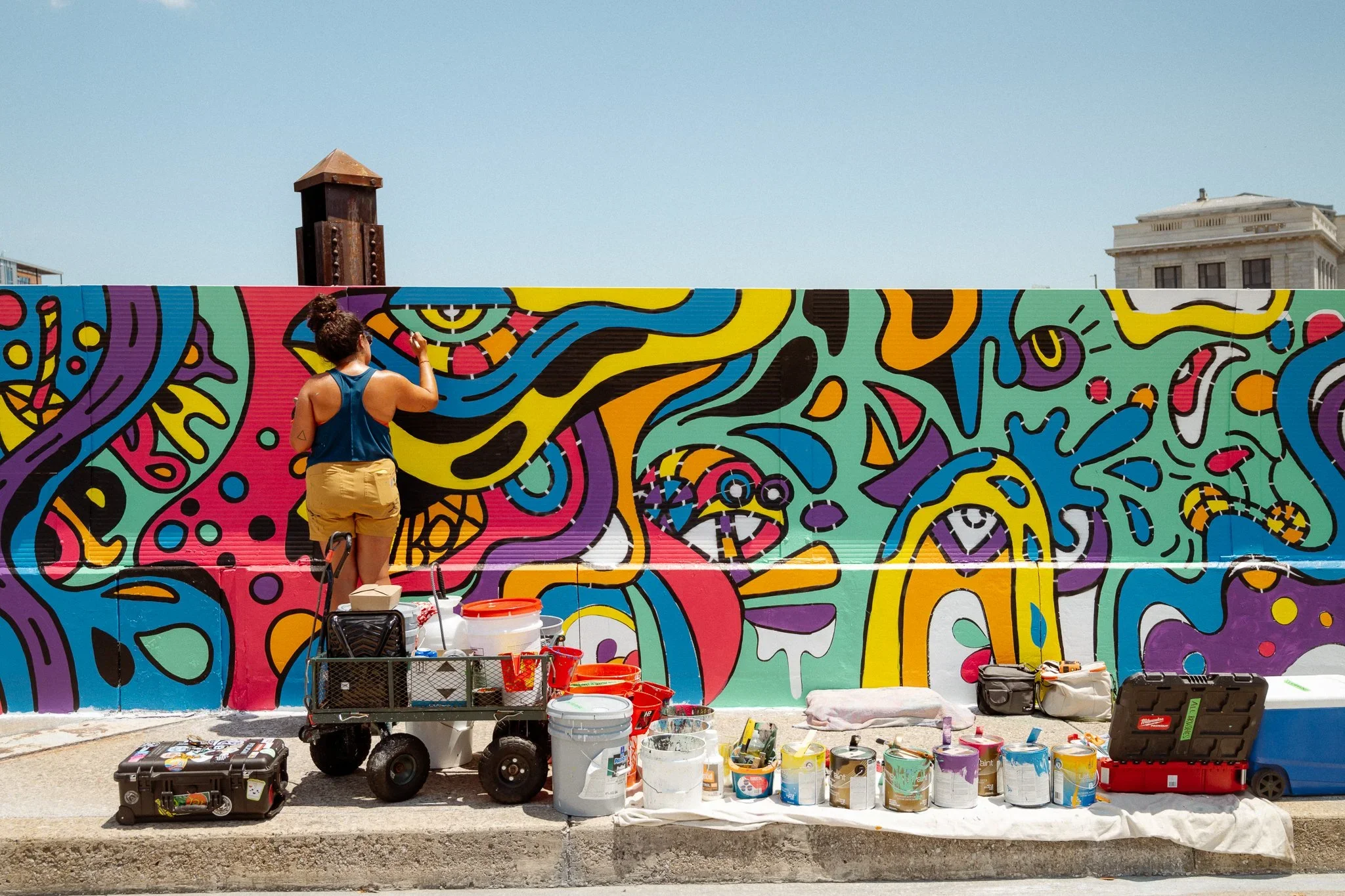
Redefining the Jones Falls Corridor into a Connected, Creative Gateway
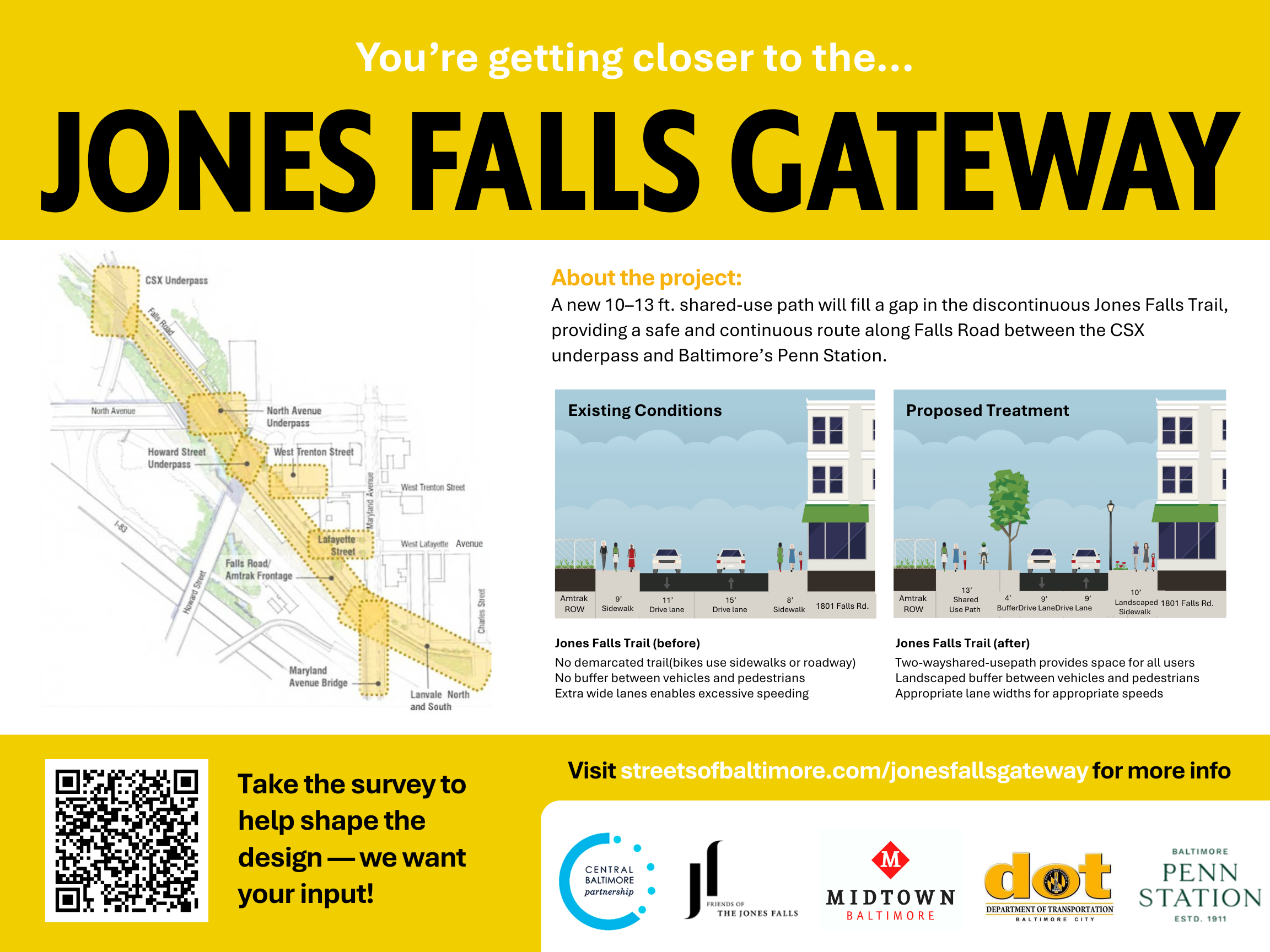
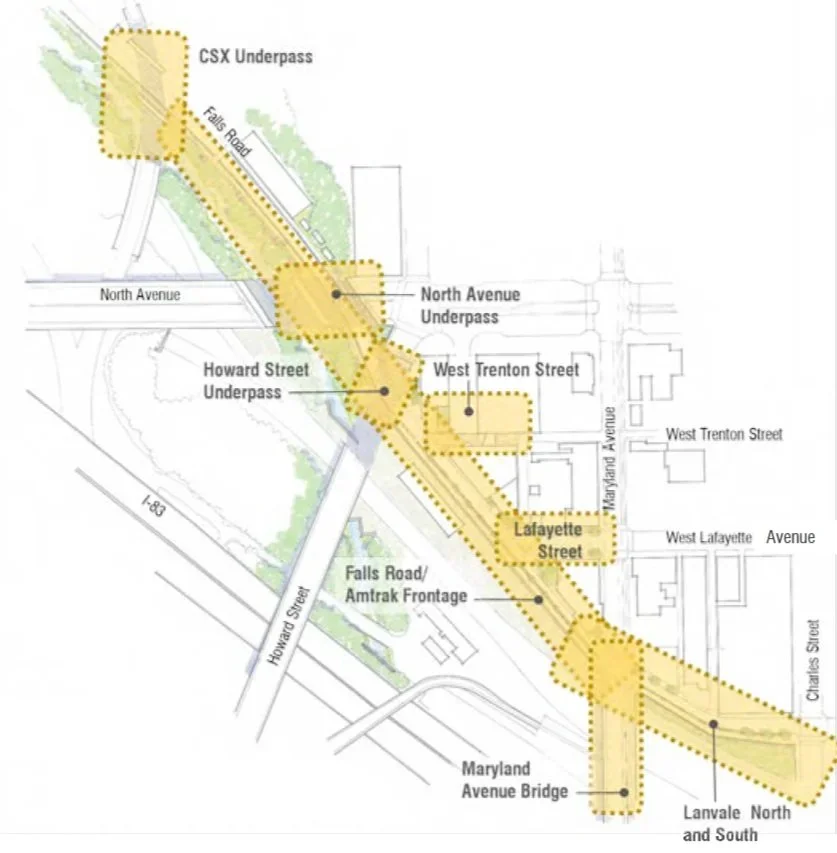
The Falls Gateway Masterplan set out a bold vision to transform the stretch of the Jones Falls Trail from Baltimore’s Penn Station multimodal hub south toward Mount Vernon into a safe, accessible, and vibrant urban corridor. The plan emphasized three major underpass upgrades, a repositioned trail alignment, and integrated public-art and placemaking strategies that merged infrastructure and creativity.
Project Overview: Baltimore’s Hidden River, Reimagined
There are 3 key elements of the Masterplan:
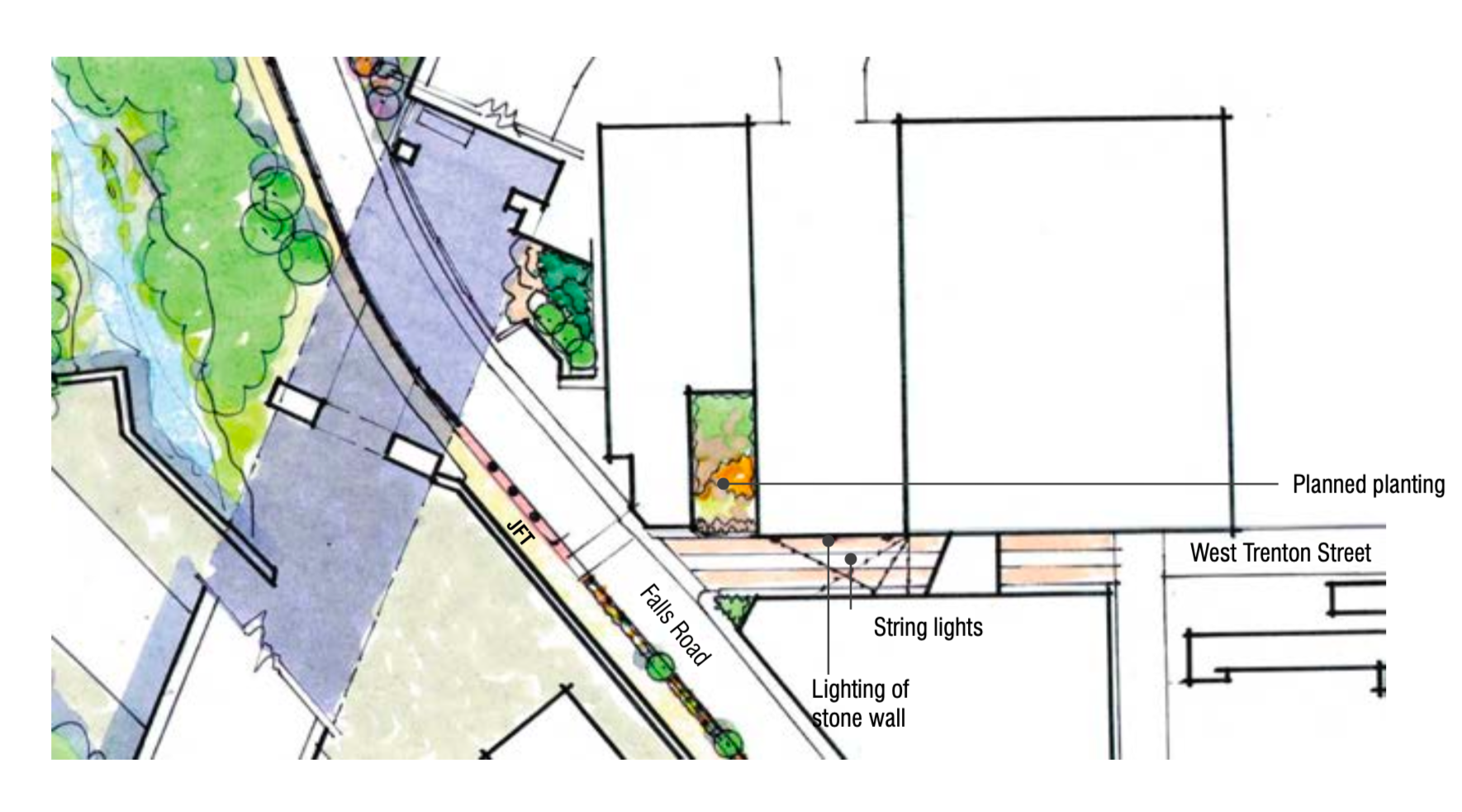
Underpass Improvements: Lighting upgrades and material removal at the CSX, North Avenue, and Howard Street underpasses enhance safety and open new opportunities for public placemaking.
Trail Realignment: The Jones Falls Trail shifts to the south side of Falls Road, widening pathways, improving safety, and calming traffic while maintaining a continuous trail connection.
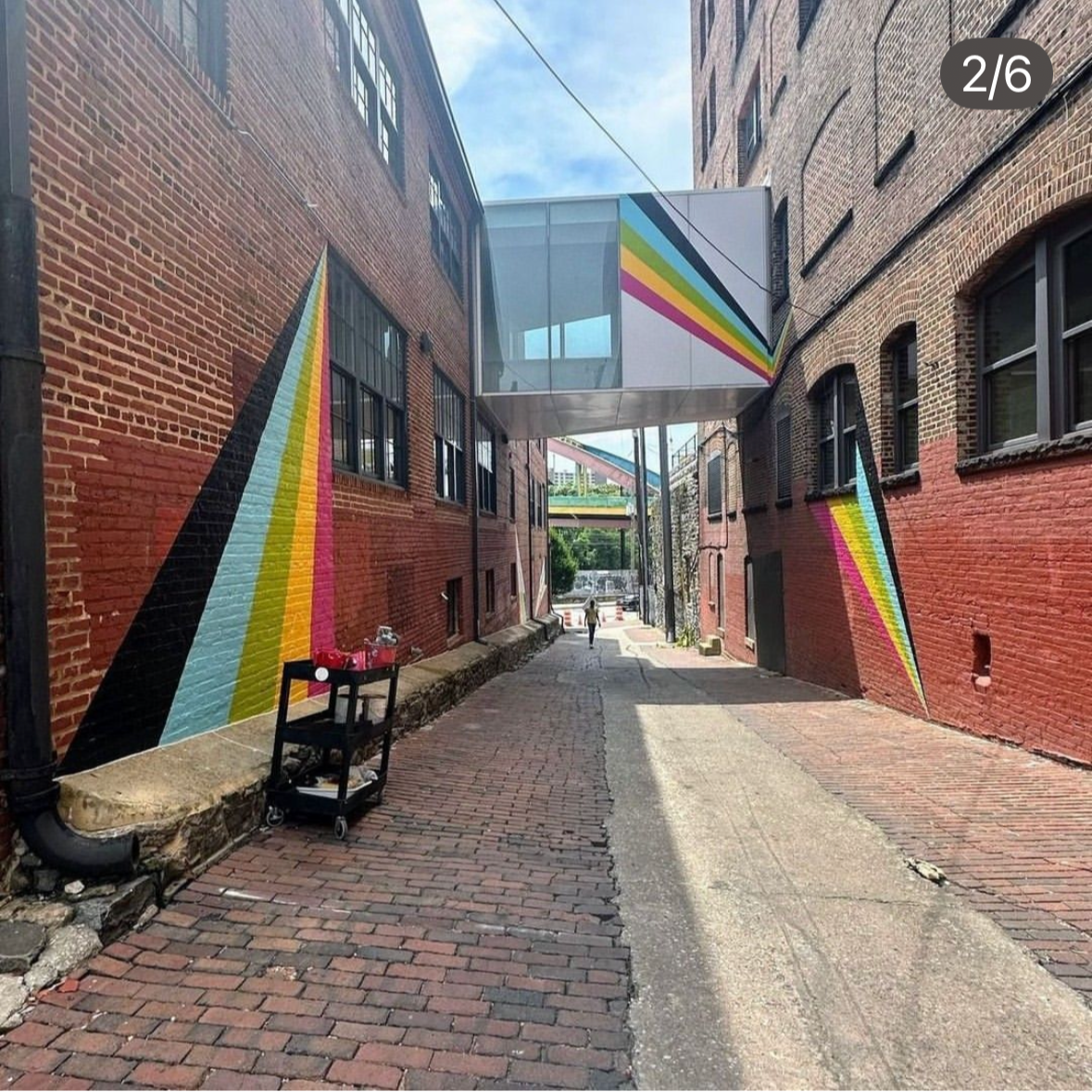
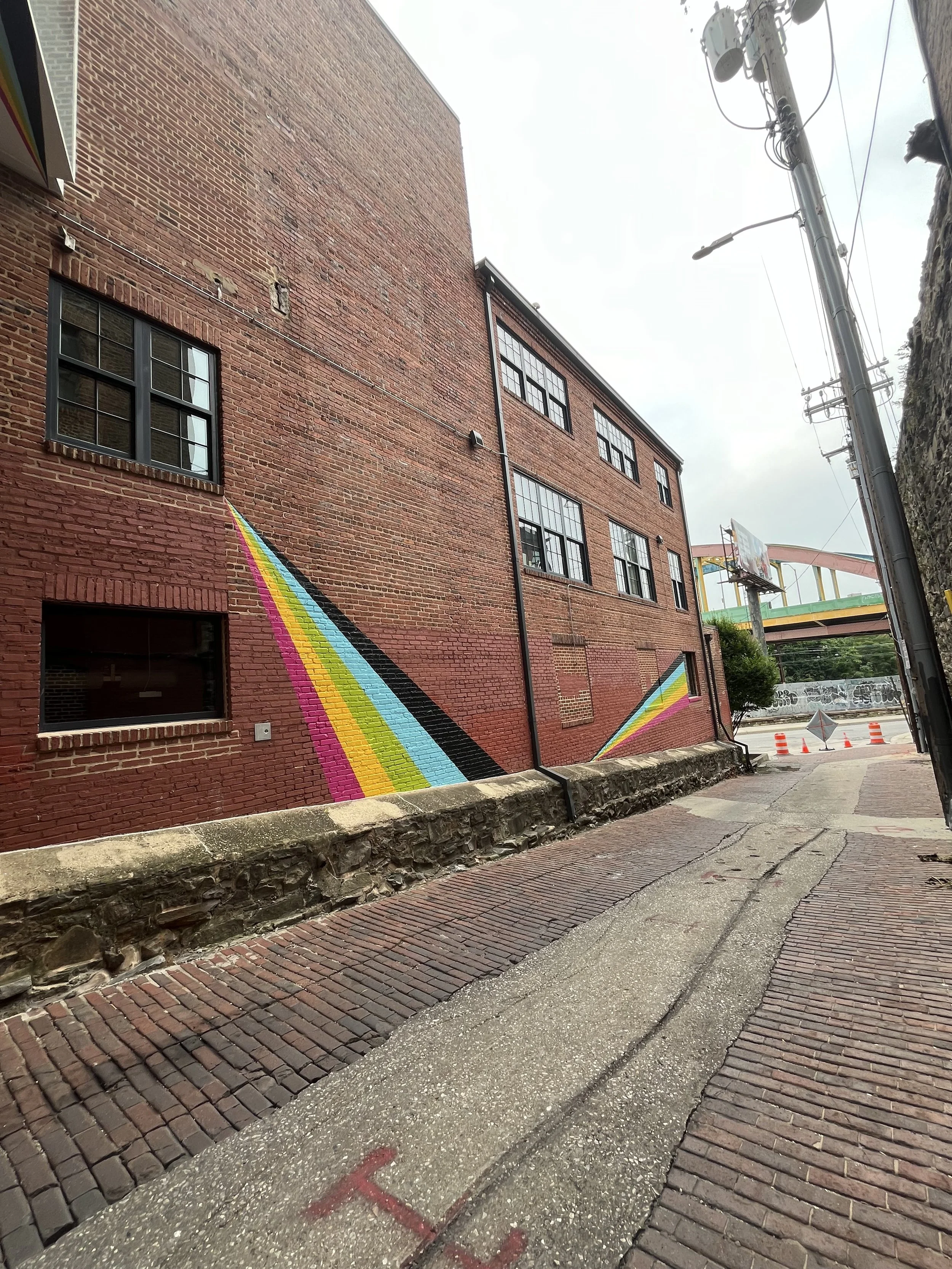
Art & Placemaking Enhancements: Murals, lighting, and pocket-scale art activations transform alleys, bridges, and public spaces into creative gathering points throughout the corridor.
-
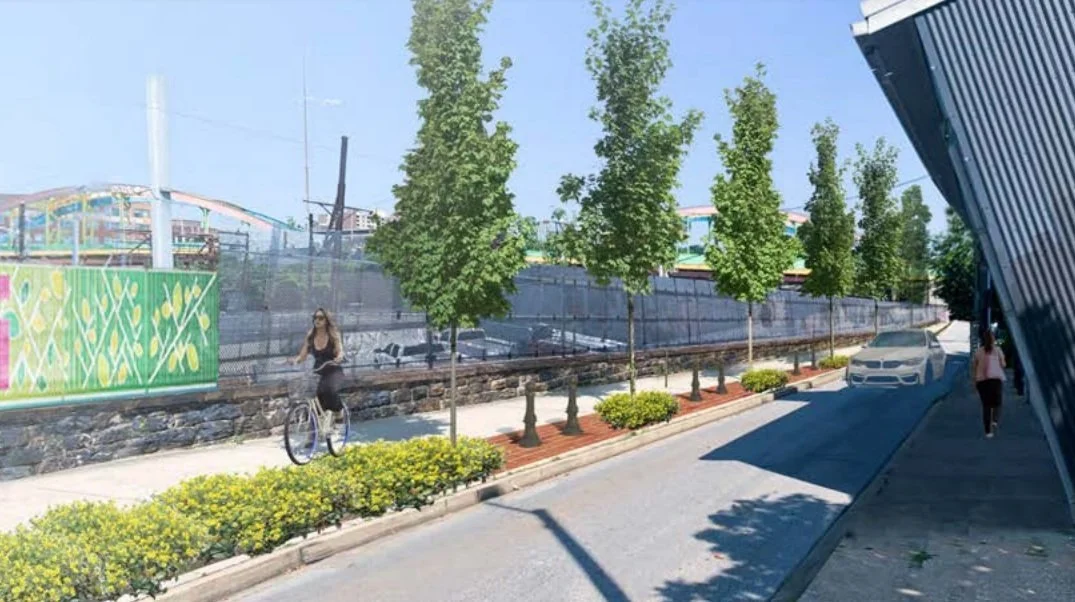
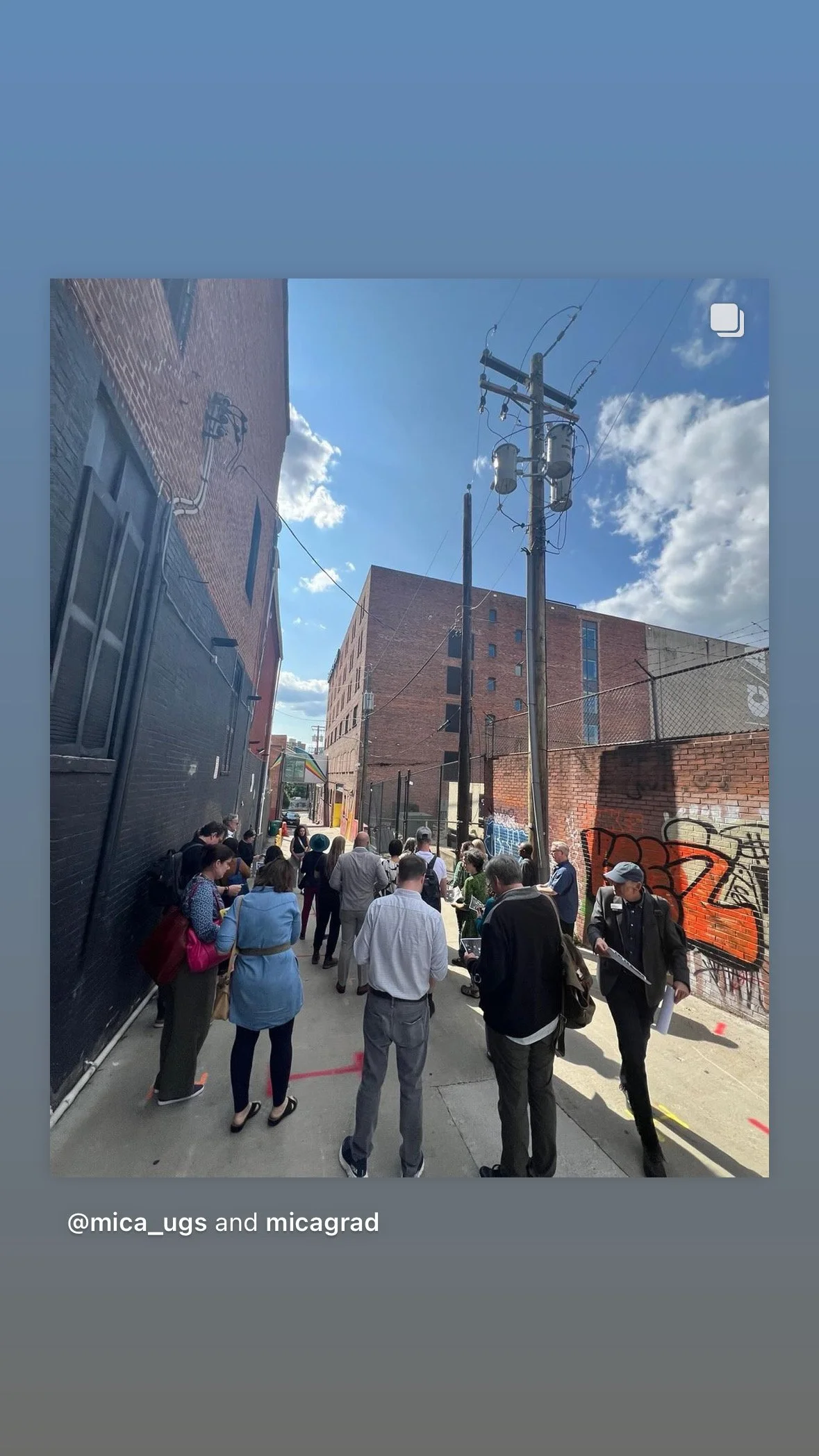
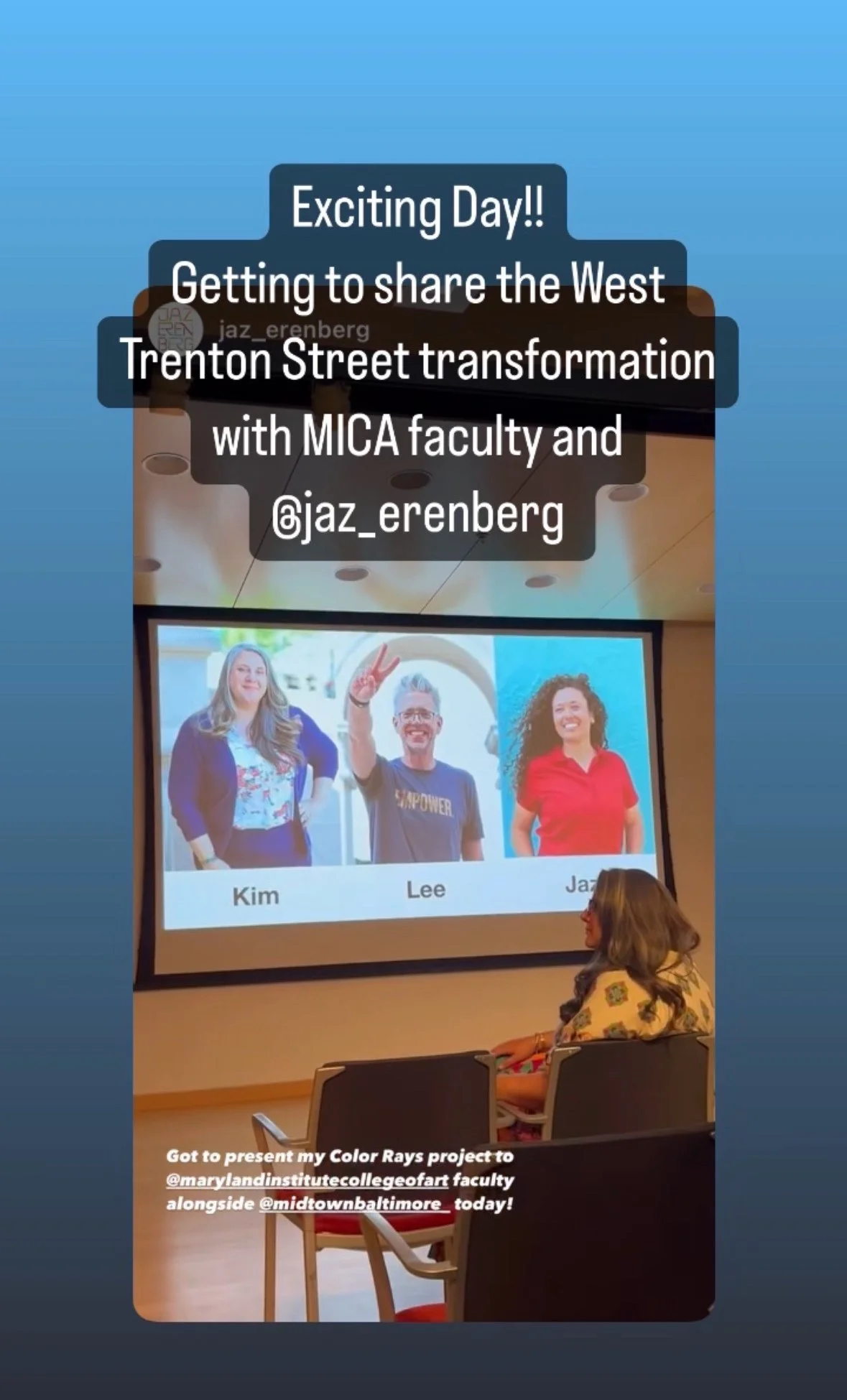
Coordinated design discussions with agencies, artists, and stakeholders to embed art into infrastructure—developing lighting, murals, and public spaces that connected the Jones Falls Trail from Penn Station to downtown.
-
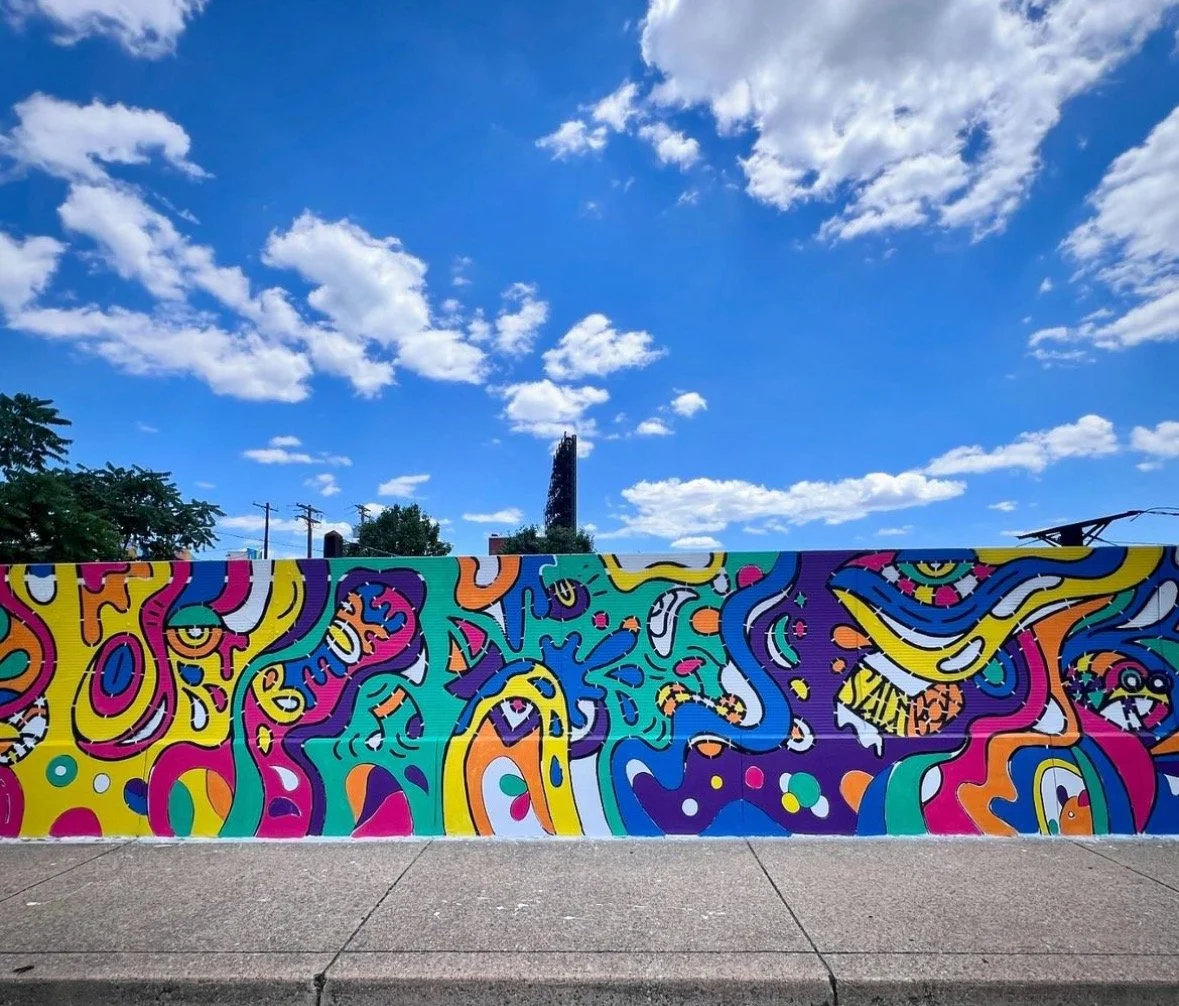
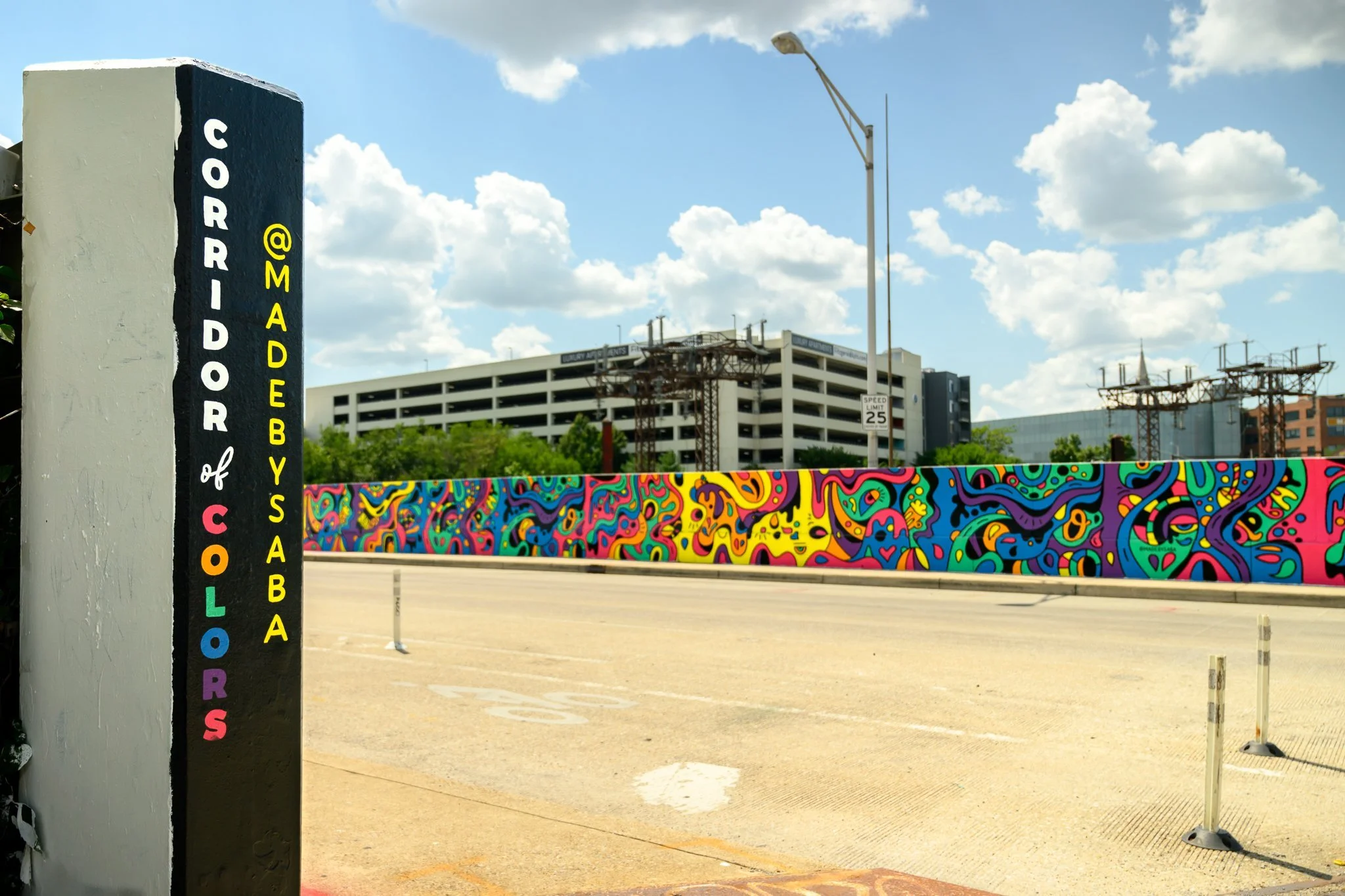
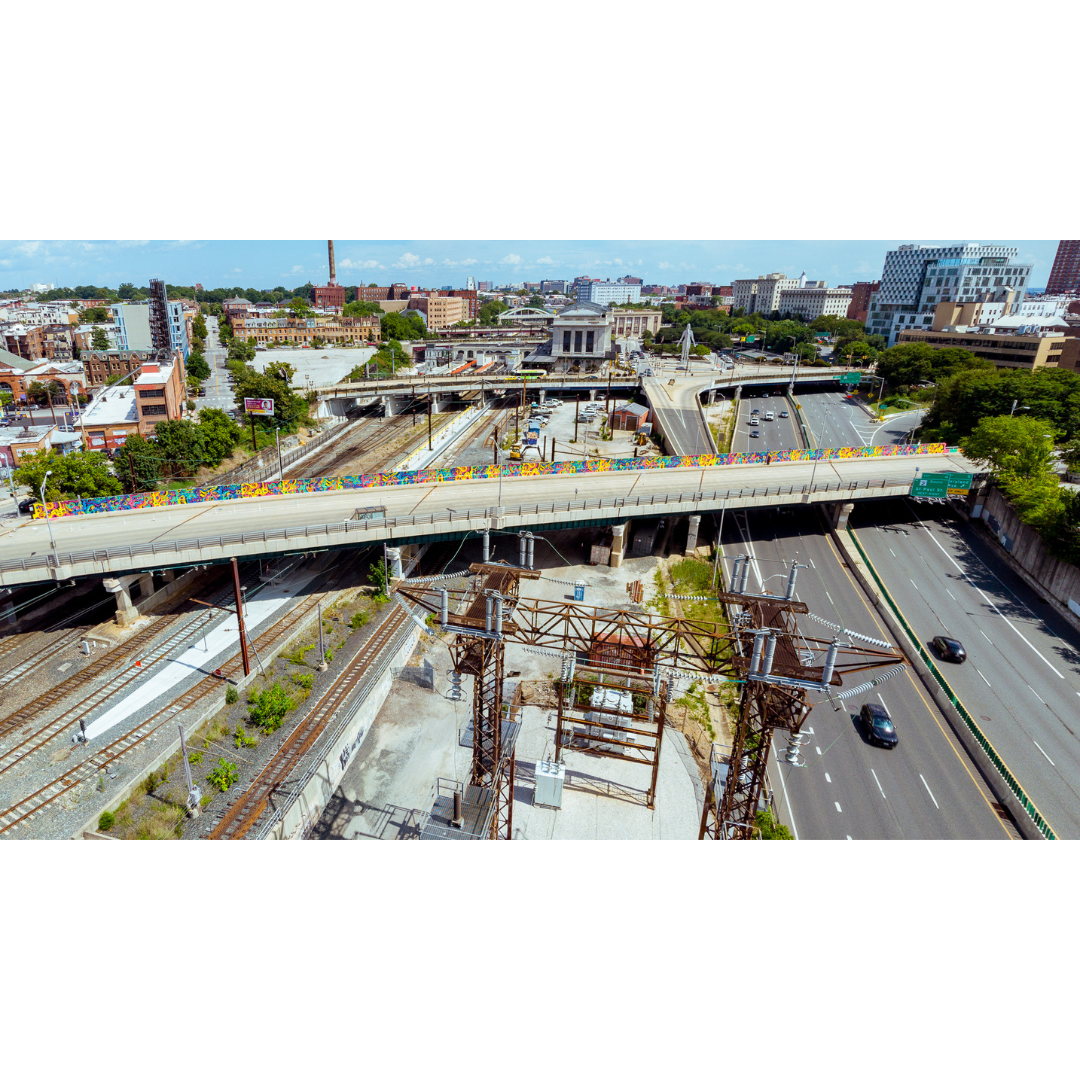
Led public-art and placemaking components of the masterplan, transforming underpasses, West Trenton Alley, and the Maryland Avenue Bridge mural into gateways expressing community identity and local character.
-
Elevated awareness of the Jones Falls corridor as a vital public asset, building lasting citywide support for a safer, greener, and more artful Baltimore.
-
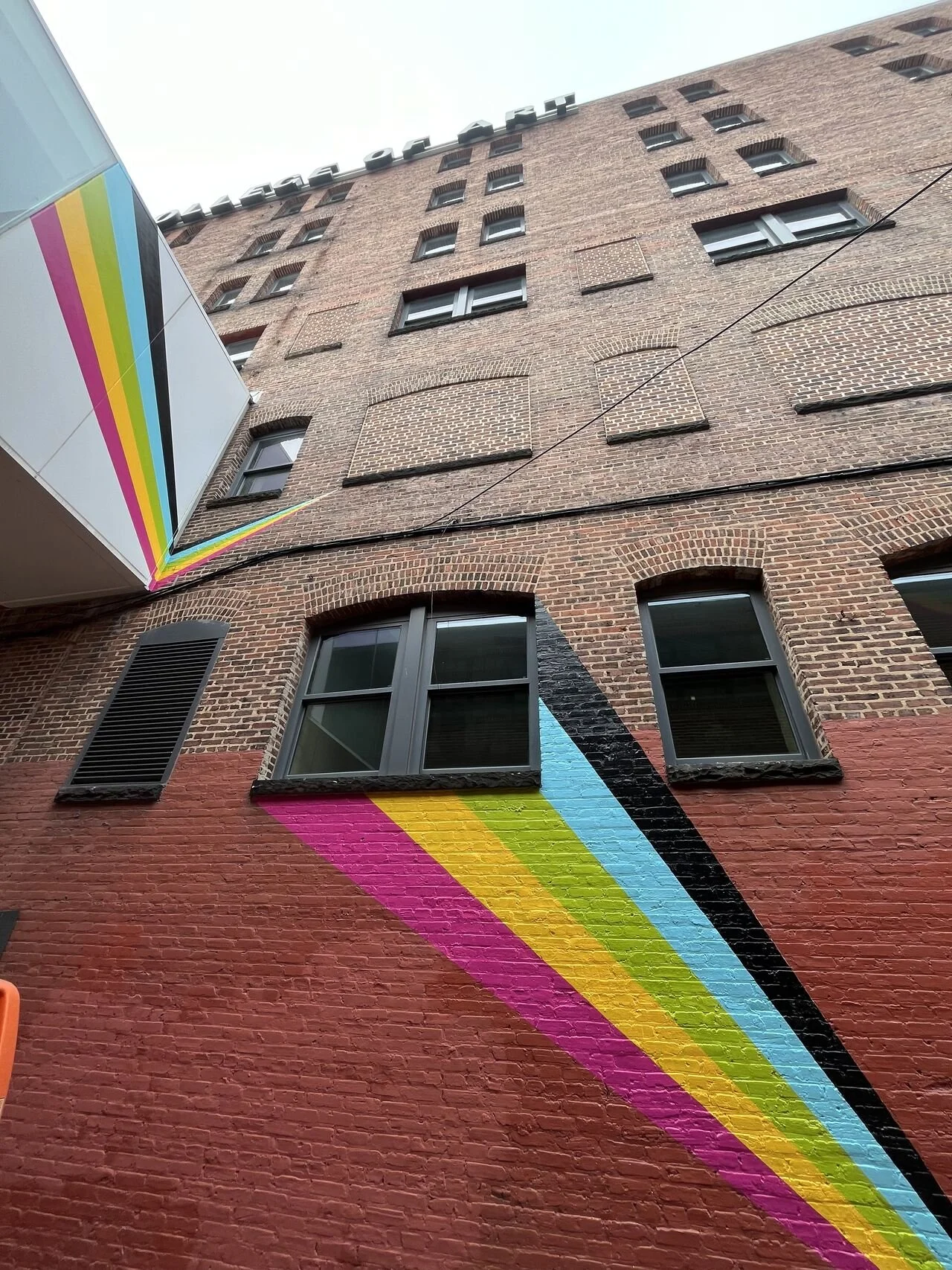
Funding enabled follow-up activations like the Maryland Avenue Bridge Mural and transformation of West Trenton Alley, reinforcing Midtown’s leadership in merging art, infrastructure, and civic engagement.